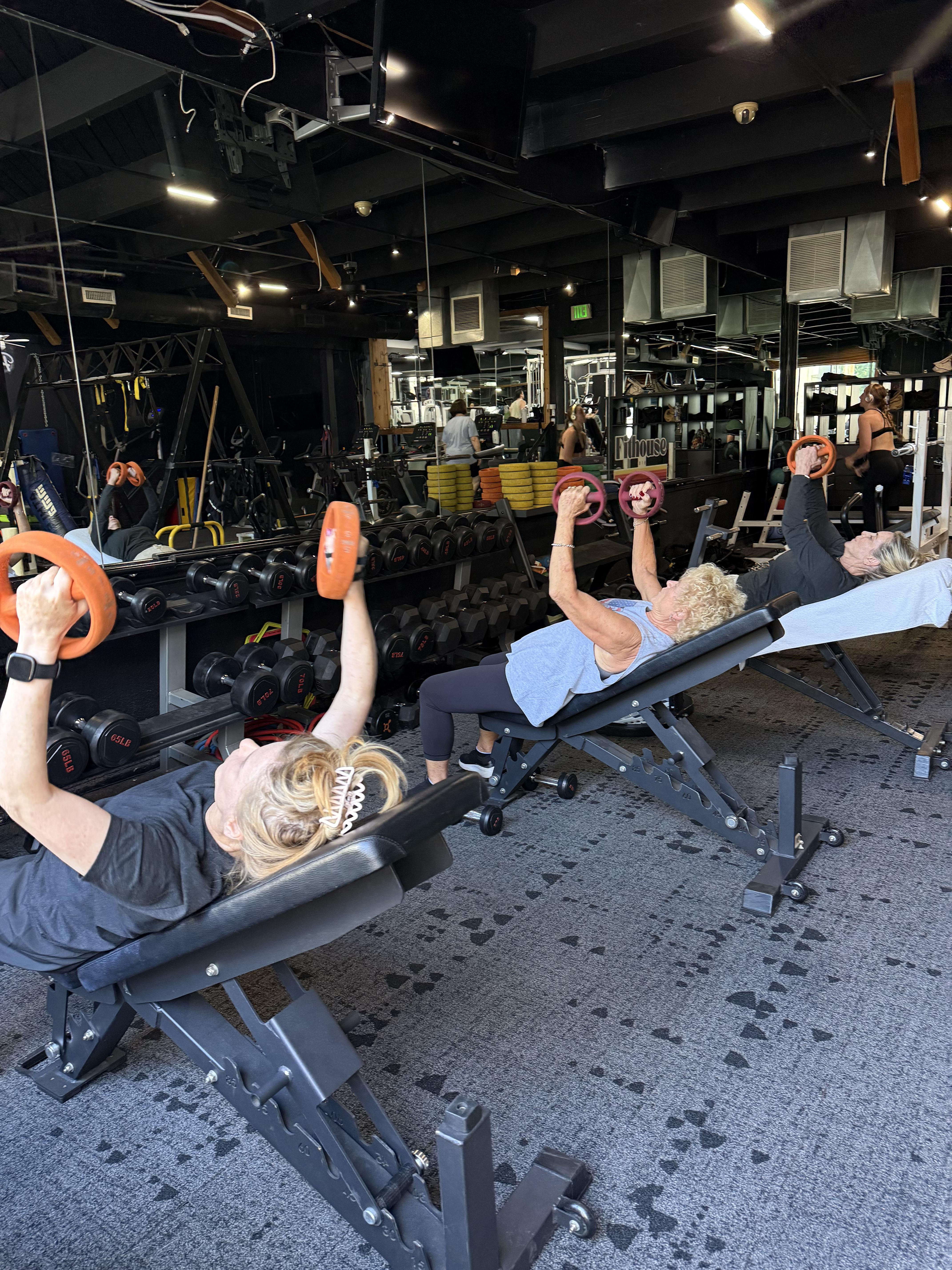
Strength Training & Body Composition Science | Fithouse 818 Sherman Oaks
The Science Behind Strength Training and Body Composition (Why It Still Works Better Than Everything Else)
If you look at modern fitness trends, you’ll see endless new approaches to fat loss—high-intensity circuits, detox programs, wearable tech, trending workouts, and “quick fix” systems.
But underneath all of it, the science of body composition hasn’t changed.
Strength training remains one of the most effective and reliable ways to improve how your body looks, performs, and ages.
Not because it’s trendy—but because it works on a biological level.
What actually determines body composition
Body composition is the ratio of lean muscle mass to body fat.
Improving it doesn’t just mean “losing weight.” It means:
Increasing lean muscle
Reducing excess fat
Improving metabolic efficiency
Enhancing physical performance and energy
And the body only changes this ratio in response to one primary signal: resistance.
Why strength training is the foundation
Strength training creates controlled stress on the body. In response, the body adapts by becoming stronger, more efficient, and more resilient.
That adaptation process is what drives real change.
Key physiological responses include:
Muscle protein synthesis (building new muscle tissue)
Increased resting metabolic rate
Improved insulin sensitivity
Greater calorie utilization even at rest
In simple terms: strength training doesn’t just burn calories during the workout—it changes how your body uses energy long-term.
Why cardio alone isn’t enough
Cardio has benefits for heart health and calorie expenditure, but it does not provide enough resistance stimulus to build or preserve significant muscle mass on its own.
Without muscle stimulus:
Metabolism can slow over time
Weight loss may include muscle loss
Long-term body composition improvements stall
This is why many people lose weight with cardio, but don’t achieve the “toned” or athletic look they’re aiming for.
The role of progressive overload
One of the most important principles in strength training is progressive overload.
This means gradually increasing demand on the body over time through:
Increased weight
More repetitions
Improved movement control
Higher training density
Without progression, the body adapts quickly and stops changing.
Progressive overload is what turns basic workouts into long-term transformation.
Consistency is where results actually happen
Even the best program fails without consistency.
The body doesn’t respond to occasional effort—it responds to repeated exposure over time.
This is why structured training environments tend to outperform random workouts. They remove decision fatigue and create a repeatable system.
What this means in real life
If your goal is fat loss, muscle definition, or improved performance, the most effective approach is not complicated:
Train with resistance regularly
Follow a structured progression plan
Support recovery with nutrition and sleep
Stay consistent long enough for adaptation to occur
Everything else is secondary.
Why this matters for people training in Burbank and surrounding areas
In highly active areas like Burbank, Studio City, Valley Village, and Sherman Oaks, there’s no shortage of fitness options.
But the difference between short-term effort and long-term results comes down to structure, coaching, and execution—not access to equipment or trendy programming.
That’s why strength-based, guided training remains the most reliable path for sustainable body transformation.
Final takeaway
Body composition change isn’t random, and it isn’t driven by trends.
It’s driven by a consistent application of resistance training, progression, and recovery.
Once you understand that, fitness stops being confusing—and becomes predictable.
Fithouse 818 -- Sherman Oaks.
Built Different.